เร่งปรับขาเทียมช่วยช้าง! โควิดทำไม่ได้ปรับ-เปลี่ยนมา 2 ปี พังโมชะหลังโก่ง-โม่ตาลาเล็บแตก
Urgent Move to Adjust Elephants’ Prosthetic Legs
เผยแพร่: 22 มี.ค. 2565 07:38 ปรับปรุง: 22 มี.ค. 2565 07:38 โดย: ผู้จัดการออนไลน์
Published on 22 March 2022 by MGR Online
https://mgronline.com/local/detail/9650000027780
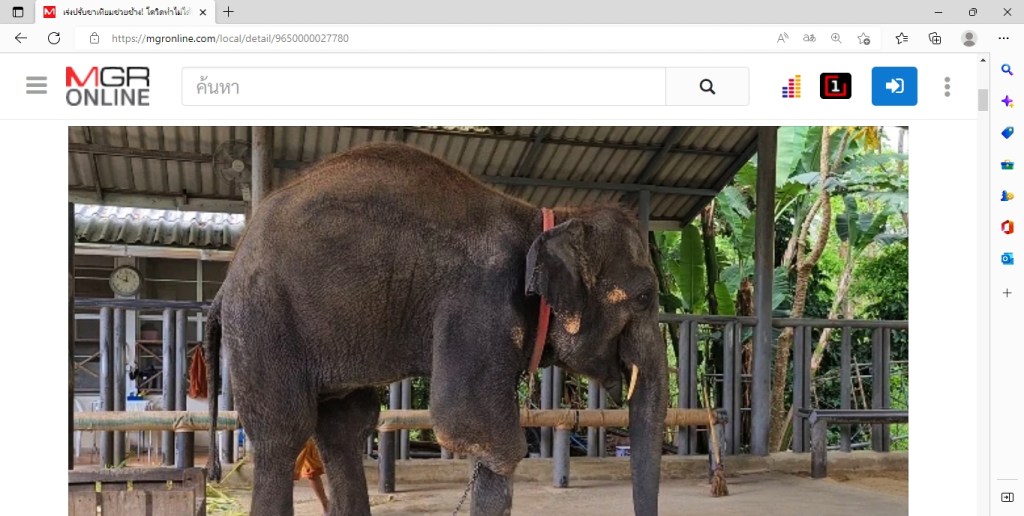
ลำปาง – เร่งปรับขาเทียม “พังโม่ชะ-พังโม่ตาลา” ช้างเหยื่อกับระเบิดชายแดนพม่าที่ใส่ขาเทียม 2 เชือกแรกของโลก หลังสภาพร่างกายของช้างเติบโตขึ้น แต่สถานการณ์โควิดทำทีมทำขาเทียมเดินทางไม่ได้มานาน 2 ปี จนกระดูกสันหลังพังโม่ชะโก่ง
Lampang — An urgent move is being made to adjust prosthetic legs for Mosha and Motala, the first two elephants in the world to wear prosthetic legs. Both elephants were injured by landmines on the other side of the Myanmar border. Mosha has been growing. But due to the pandemic situation, the team members assigned to produce the elephants’ prosthetic legs were prevented from travelling to the production site for a period of two years. During this time, Mosha’s backbone has become even more curved.
รศ.นพ.เทอดชัย ชีวะเกตุ อดีตเลขาธิการมูลนิธิขาเทียม ในสมเด็จพระศรีนครินทราบรมราชชนนี พร้อมคณะได้เดินทางมาตรวจสอบสภาพขาเทียม ที่ทำให้กับพังโม่ชะ อายุ 16 ปี และ พังโม่ตาลา อายุ 61 ปี ซึ่งเหยียบกับระเบิดบริเวณชายแดนฝั่งประเทศพม่า ด้านจังหวัดตาก ก่อนเจ้าของจะนำส่งมารักษาที่มูลนิธิเพื่อนช้าง เมื่อปี 2542 (พังโม่ตาลา) และปี 2549 (พังโม่ชะ)
Associate Professor Dr. Therdchai Jivacate, former Secretary General of the Prostheses Foundation under the patronage of Princess Srinagarindra, arrived at FAE Elephant Hospital with the members of the production team. They are here to examine the state of the prosthetic legs that they had produced for Mosha, aged 16, and Motala, aged 61. Both elephants were injured by landmines on the other side of the Myanmar border which is a neighbouring zone of Tak Province. The owners delivered the two elephants for treatment at Friends of the Asian Elephant Foundation Hospital in 1999 (Motala) and 2006 (Mosha).
ต่อมาทางมูลนิธิฯ ได้ช่วยรักษาจนสุดท้ายพังโม่ชะที่ได้รับบาดเจ็บเท้าหน้าขวาต้องถูกตัดตั้งแต่ใต้เข่าลงมาทิ้ง ส่วนพังโม่ตาลาได้รับบาดเจ็บที่เท้าหน้าซ้าย ฝ่าเท้าขาดรุ่งริ่งไม่สามารถเหยียบพื้นได้ ขณะที่เจ้าของช้างไม่สามารถเลี้ยงดูช้างได้ จึงมอบให้อยู่ในความดูแลของมูลนิธิฯ จนถึงปัจจุบัน
Over the course of the treatment at FAE Elephant Hospital, Mosha had to lose her front right foot from the knee downwards. As for Motala, the injury on the elephant’s front left foot had left the footpad torn apart, preventing the elephant from placing her weight on that foot while standing. The owners of both elephants could no longer care for them, and finally donated the elephants to the Foundation. The two elephants have remained permanent residents at FAE Elephant Hospital to this very day.
หลังจากการรักษาบาดแผลหายสนิท ทำให้ช้างทั้งสองเชือกมีปัญหาด้านการทรงตัว การเดิน การรับน้ำหนัก เพราะใช้ขาได้เพียง 3 ขาเท่านั้นในการพยุงตัวเอง ทำให้เท้าหน้าข้างที่เหลือ ซึ่งรับน้ำหนักมากขึ้นเรื่อยๆเริ่มมีปัญหาโค้งงอผิดรูป และกระดูกสันหลังเริ่มโก่งงอเนื่องจากเสียการทรงตัว
Following the complete healing of their wounds, the two elephants had problems with the way they balanced themselves and the placement and distribution of their weight. As three-legged elephants, they experienced issues with the way they supported themselves while walking. The other front leg had to bear an increasing level of the burden to compensate for the lack of capacity of the disabled leg. This imbalance caused the surviving front leg to become abnormally curved. And due to the sense of balance that had suffered from overcompensation, the elephant’s backbone became abnormally curved.
ตลอดระยะเวลารักษาสิบกว่าปีที่พังโม่ตาลาอยู่ในความดูแลของมูลนิธิเพื่อนช้าง พังโม่ตาลามีสุขภาพแข็งแรง กินอาหารและน้ำได้ดี ระบบขับถ่ายเป็นปกติ บาดแผลผ่าตัดเกือบหายดี ทาง รศ.นพ.เทอดชัยจึงทำขาเทียมให้ “พังโม่ชะ” ก่อน จึงเป็นช้างเชือกแรกของโลกที่ได้ใส่ขาเทียม ในปี 2551 แต่แผลพังโม่ตาลาหายค่อนข้างช้า จึงได้ทำขาเทียมสวมใส่เป็นเชือกที่ 2 ของโลกที่ใส่ขาเทียมในปี 2552
Over the first ten years of Motala’s residence at FAE Elephant Hospital where she received care and treatment, her health was of a good standard. She ate well, drank water well, and relieved herself normally. The time came when Motala’s wound site in which her surgical operation took place was nearing the stage of being completely healed. But Associate Professor Dr. Therdchai decided to begin the design of Mosha’s prosthetic leg first, making Mosha the world’s first elephant to wear a prosthetic leg in 2008. Motala’s wound took a long time to heal, so she became the world’s second elephant to wear a prosthetic leg, with her first one completed in 2009.
หลังจากใส่ขาเทียมไปแล้ว ก็ได้มีการปรับเปลี่ยนขนาดไปตามความเจริญเติบโตของช้าง ซึ่งที่ผ่านมาพังโม่ชะเปลี่ยนขาเทียมไปแล้ว 12 อัน อันนี้เป็นอันที่ 13 ส่วนพังโม่ตาลาเปลี่ยนมาแล้ว 8 อัน อันนี้เป็นอันที่ 9
Following the completion of Mosha’s first prosthetic leg, adjustments and changes were made according to the elephant’s growth patterns. Mosha has changed her prosthetic leg twelve times, making the current one her thirteenth prosthetic leg. Motala has had eight changes, making this her ninth prosthetic leg.
แต่ช่วงโควิดสองปีกว่าที่ผ่านมา ทางทีมงานไม่สามารถเดินทางมาตรวจและปรับขนาดได้ จึงทำให้ช้างไม่ได้ใช้ขาเทียม ซึ่งก็พบว่าพังโม่ชะเริ่มมีอาการกระดูกสันหลังโค้งโก่งงอมากขึ้น เนื่องจากขารับน้ำหนักได้เพียง 3 ขา และต้องนอนบ่อย
But over the past two years of the Covid pandemic, the team members couldn’t travel to FAE Elephant Hospital to perform examinations and adjustments. Since the measurements of the prosthetic legs couldn’t be adjusted accordingly, the elephants had to stop using their prostheses. Mosha’s backbone became even more curved, due to her three legs having to bear the entire burden of her body. Furthermore, without a wearable prosthetic leg, the elephant has had to lie down more frequently.
นางสาวโซไรดา ซาลวาลา เลขาธิการมูลนิธิเพื่อนช้าง กล่าวว่า ที่ผ่านมาต้องเอาขาเทียมออกเพราะเริ่มไม่ได้ขนาด-ช้างสวมไม่ถนัด ซึ่งจะสังเกตว่าพังโม่ตาลาหลังจากที่ไม่ได้ใส่ขาเทียมน้ำหนักมาลงเพียงขาเดียว ทำให้ขาเริ่มบวมและเล็บแตก ส่วนพังโม่ชะก็เช่นกัน เริ่มขาบวมและมีการโก่งงอของสันหลังเพิ่มขึ้น หากไม่รีบให้ใส่ขาเทียมโดยเร็ว โอกาสที่จะเดินไม่ได้ในอนาคตมีสูง อย่างไรก็ตาม ทางคณะ รศ.นพ.เทอดชัยได้มาตรวจสอบขาเทียมช้างเมื่อ 21 มี.ค. 65 และจะทำการแก้ไขให้สวมใส่ได้โดยไม่ต้องขึ้นรูปใหม่ซึ่งก็จะเร็วขึ้น
Ms. Soraida Salwala, Founder and Secretary General of Friends of the Asian Elephant Foundation, explains that the elephants had to stop wearing their prosthetic legs. The outdated measurements meant that the elephants were experiencing difficulties in the wearing of the devices. In Motala’s case, following a period of not wearing her prosthetic leg, swollenness could be observed in the elephant’s other front leg that has had to overcompensate in bearing the burden of her weight. Furthermore, cracks have occurred on her nails. Mosha is also exhibiting swollenness in her legs. And her backbone has become more curved. If a proper prosthetic leg is not produced for her to wear as a matter of urgency, the elephant will stand a high risk of not being able to walk in the future. Regardless of the pandemic-driven circumstances, on the 21st of March 2022, Associate Professor Dr. Therdchai Jivacate and his team arrived to perform examinations of the elephants’ prosthetic legs. The team will make adjustments without having to create new models for the prostheses. Taking this avenue will help to speed up the process.
รศ.นพ.เทอดชัยได้กล่าวว่า จากการตรวจสอบขาเทียมที่ช้างสวมใส่ ต้องมีการปรับแก้บางส่วน คือ พังโม่ชะ จะต้องเพิ่มขนาดบางจุด เพราะขาของช้างใหญ่ขึ้น ส่วนกระดูกสันหลังที่โก่งงอ หากมีการใช้ขาเทียมไปตลอด ก็จะช่วยพยุงน้ำหนักได้ และด้วยพังโม่ชะเจริญเต็มที่แล้ว ก็จะทำให้กระดูกไม่โก่งงอไปมากกว่านี้แล้ว ส่วนพังโม่ตาลาอาจจะต้องมีการลดระดับความสูงลงมา เพราะจากการสังเกตเวลาเดิน เท้าช้างจะแบะออกด้านข้าง ไม่สามารถยืนตรงได้ เนื่องจากขาเทียมสูงกว่าเท้าปกติอีกข้าง ซึ่งก็แก้ไขไม่ยาก และใช้เวลาเร็วกว่าการขึ้นรูปใหม่
Associate Professor Dr. Therdchai explains the need to make adjustments and reparations to certain parts of the elephants’ prosthetic legs. For Mosha, there needs to be an increase in size at certain points of the prosthetic device, since the elephant’s leg has been getting larger. As for Mosha’s curving backbone, the consistent wearing of a prosthetic leg will help to support the elephant’s weight. And since Mosha is already a fully grown elephant, her backbone will not keep curving if her overall weight continues to be properly supported. In the case of Motala, the height of her prosthetic leg will need to be reduced. The elephant tends to spread her legs out to the side while walking, preventing her from standing up straight, due to the previous prosthetic leg reaching higher than the level of her other lower leg. That part is not difficult to resolve. And focusing on these areas of adjustment will take less time than creating a new model.
 มูลนิธิเพื่อนช้าง