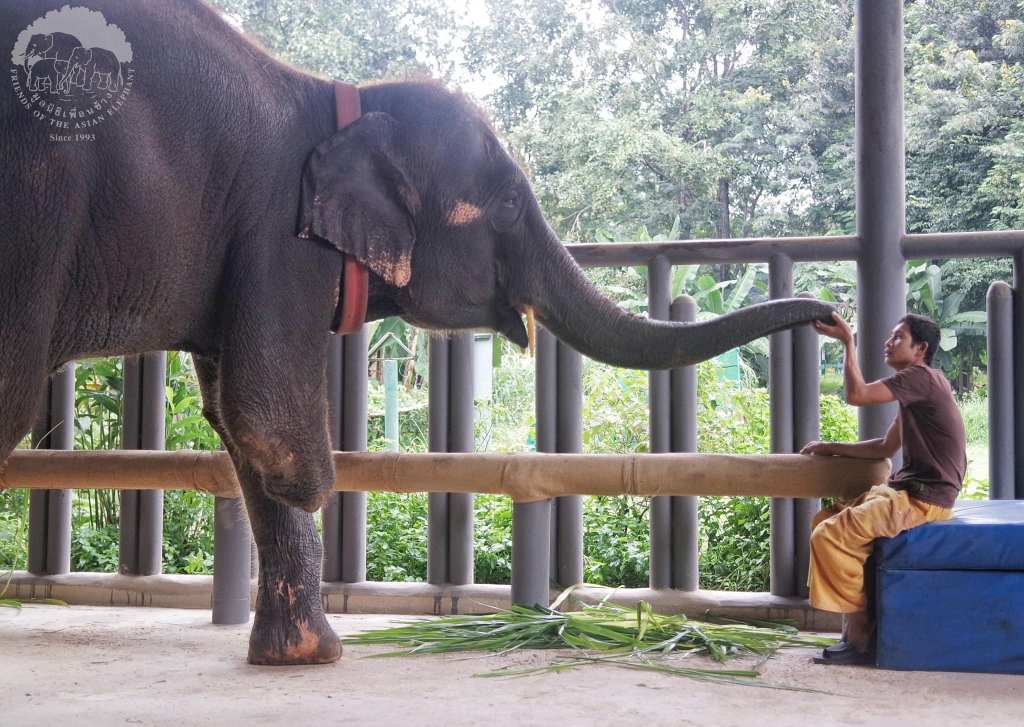
Female elephant “Mosha”, from Ta Song Yang District in Tak Province.
Keeper: Pahlahdee Sucharit-suchada
Condition: The calf had stepped on a landmine, causing her front right foot to become severely injured. (The calf’s mother was not injured.) The accident took place on the 9th of June 2006, across the Myanmar border, while the calf was walking with her mother.
Date of admission: 11 June 2006
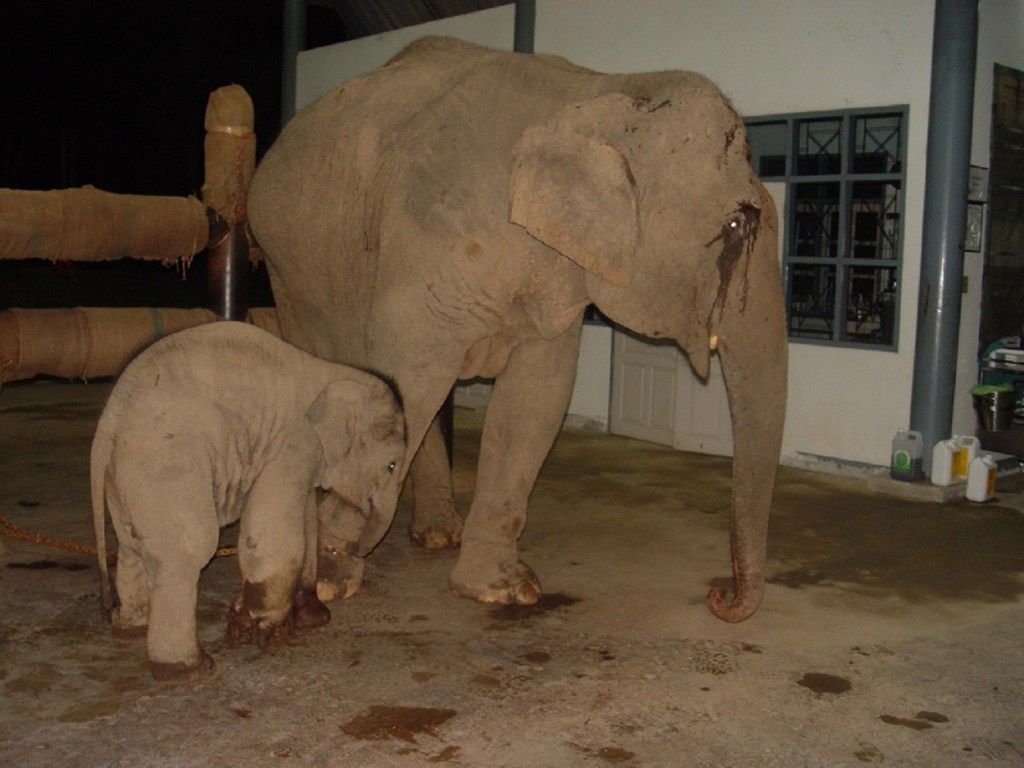
When Baby Mosha was just over seven months old, she was injured by a landmine on the 9th of June 2006 at 14.00 while she was walking with her mother. The owner had been using the mother elephant in logging activities carried out across the Myanmar border. The calf and her mother arrived at Friends of the Asian Elephant Foundation Hospital on the 11th of June 2006 at 2.15 am.
The landmine had caused the calf’s front right foot to suffer from an extreme level of damage. She had completely lost her foot pad. The actual wound site was located around three inches above ground level.
At seven months old, the baby elephant did not have a name. The Secretary General named her “Mosha” from the Pakakayor language. (‘Mo’ means mother; and ‘sha’ means star.)
The wound was declared properly healed on the 13th of January 2007.
When Mosha was properly weaned, her mother returned to her place of origin on the 12th of December 2007. At the time, Baby Mosha was two years and one month old. The owner donated the calf to Friends of the Asian Elephant Foundation.
The production of Mosha’s first prosthetic leg was assisted by Assistant Professor Dr. Therdchai Jivacate, Secretary General of the Foundation for Prostheses under the patronage of Somdet Phra Srinagarindra Boromarajajonani, the Princess Mother (at the time). The prosthetic leg — thoroughly resembling the elephant’s leg by way of shape and colour — was officially gifted to Friends of the Asian Elephant Foundation on the 19th of July 2008. Mosha became the world’s first elephant to wear a prosthetic leg.
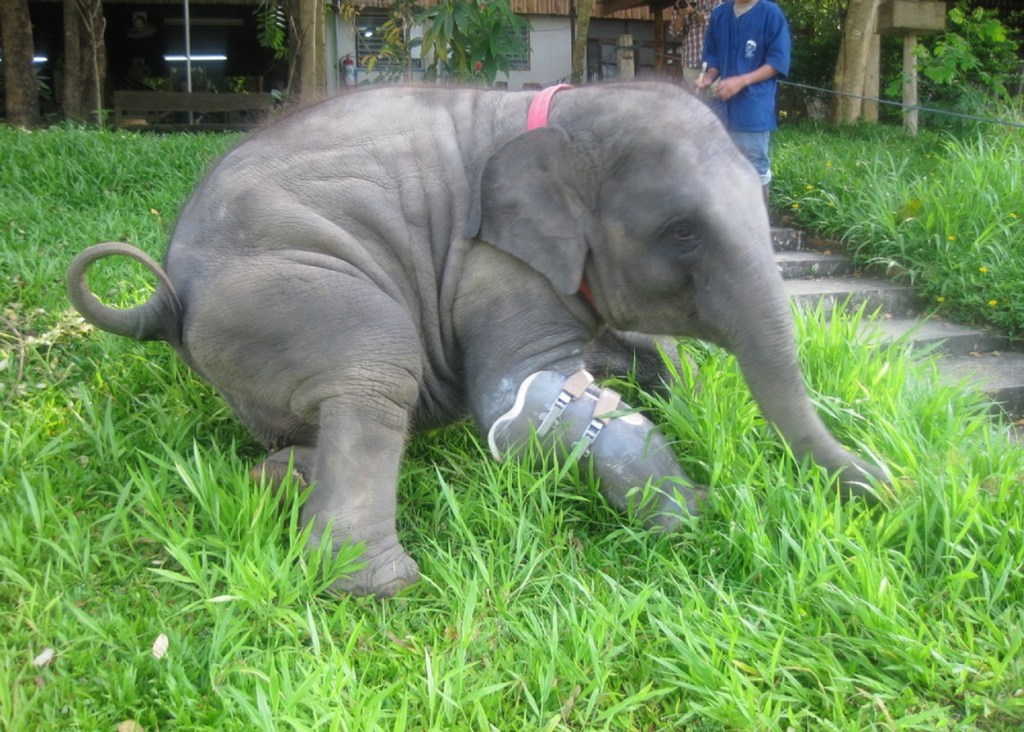
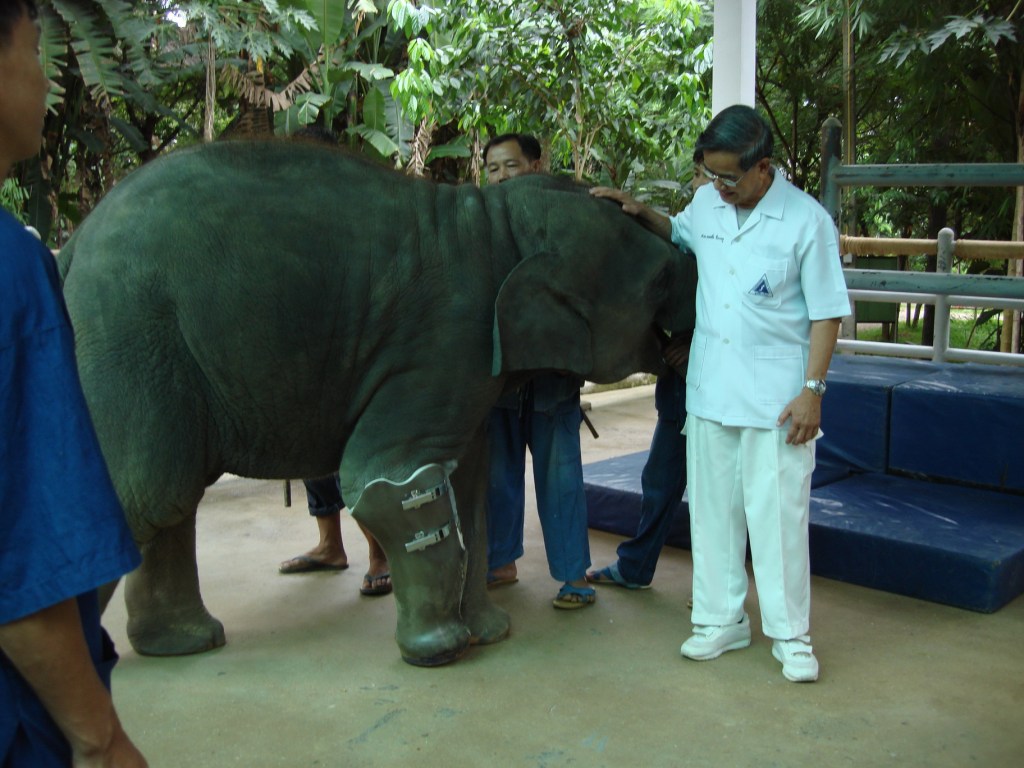
Present condition: The elephant is healthy. Her prosthetic legs to date have been adjusted and adapted over time. All prosthetic legs have exhibited the results of experimentation with production techniques that have evolved to meet the challenges and requirements of the elephant’s growth patterns.
 มูลนิธิเพื่อนช้าง